Showing posts with label avg antivirus avg network edition grisoft avg walling data anti-virus antivirus internet security walling data avg. Show all posts

Saturday, 13 December 2008

Court Enjoins Spyware Producer Under FTC Act

The U.S. District Court for the Middle District of Florida has issued a preliminary injunction against a producer of spyware under the Federal Trade Commission Act. Federal Trade Commission v. Cyberspy Software, LLC, et al., No. 6:08-cv-1872 (Preliminary Injunctive Order, Nov. 25, 2008).

The FTC sued the defendant company and its principal for unfair and/or deceptive trade practices under the FTC Act. According to the court's order, the defendants’ spyware is designed to be installed on a computer without the knowledge or consent of a computer’s user. The defendants provide instructions to customers which demonstrate how to disguise the spyware as an innocuous file. Once a user installs the spyware, the spyware tracks the user's keystrokes, passwords entered, and websites visited.

The court found the FTC was likely to succeed on the merits of the case, and that continued sale of the spyware was likely to cause substantial harm to consumers. Although the defendants argued that the spyware has some redeeming value, such as allowing a parent to track a child's Internet usage, the court noted that the defendants' marketing materials suggested that the spyware should be used for more harmful purposes.

Friday, 12 December 2008

Infonetics Research: Content security market faring well despite, and because of, economic turmoil

Another press release here and this time its good news. Despite this current financial climate it seems like security companies are still going well.

Read on....

CAMPBELL, CA, Dec 11, 2008 (MARKET WIRE via COMTEX) -- Two new reports from market research firm Infonetics Research provide strong evidence the content security market will fare well during the recession, as the drivers for buying content security products remain strong, if not increase, during economic downturns.
Infonetics' Content Security Appliances and Software report tracks and forecasts content security vendor revenue and product shipments quarterly, while User Plans for Content Security is a survey that uncovers the content security buying plans of 240 small, medium, and large organizations from various vertical markets. Together, the reports indicate the content security market is healthy from both the end-users' and the vendors' point-of-view, due to strong drivers including:
--  Regulation and compliance (a driver rising in importance in
Infonetics' user survey)
-- Explosive growth in the number, variety, and volume of threats
-- Security investment as a cost-saving measure
-- Service provider spending on security
-- Reactive product buying to solve immediate security issues


"The global economy is hurting right now, but we expect content security overall to be a bright spot, not just despite the turmoil, but in part because of it. History shows that a negative economy stimulates security threats, resulting in an increased need to protect against them. As a result, we've actually upped our 2008-2011 content security forecast total by 2% in our quarterly forecast report," said Jeff Wilson, principal analyst for network security at Infonetics Research.
Highlights from Infonetics' Content Security Appliances and Software report:
--  The worldwide content software and appliances market increased 6.6%
from 2Q08 to 3Q08, to $516 million, led by strong sales in all world
regions, especially North America
-- Websense leads the overall content security market (appliances and
software) in 3Q08, and Blue Coat leads the content security appliance
segment
-- Cisco's posted the strongest gain in 3Q08, increasing its content
security appliance revenue 21%


Highlights from Infonetics' User Plans for Content Security, North America 2008:
--  Symantec, Cisco, and McAfee were named by study respondents as the top
three content security manufacturers in an open-ended question
-- Cisco scored higher than other content security vendors in 5 of 7
criteria, including security, technology, service and support, management,
and financial stability, although they score lowest in pricing, which could
be an Achilles heal in this market
-- Cost is the number-one barrier affecting customer deployment of new
content security solutions
-- Preventing data leakage is high on the list of drivers for buying
content security products, and is a particularly interesting segment to
watch
-- Performance requirements for content security gateways are on the rise
in general, due in large part to increased threat volume


Infonetics' Content Security Appliances and Software report provides market size, market share, forecasts, and analysis for content security gateways, broken out by software and appliances, including messaging, Web/malware, and integrated appliances. The service tracks BlueCoat, Cisco, Citrix, McAfee, SonicWALL, Symantec, Trend Micro, Websense, and others.
Infonetics' User Plans for Content Security study provides in-depth analysis on organizations deploying content security over the next 2 years, and their plans for protecting against Web, IM, and e-mail threats, and from viruses, spyware, malware, data leakage, and other content-related attacks. The data is based on interviews with purchase decision makers at 240 organizations from a wide variety of vertical markets. The study covers trends, drivers, barriers, product and service preferences, expenditures, a manufacturer scorecard, and more.
For report highlights, log in to Infonetics' online portal from www.infonetics.com (see Network Security). For sales, contact Larry Howard, vice president, at larry@infonetics.com or +1 (408) 583-3335.
Infonetics Research ( www.infonetics.com) is an international market research and consulting firm serving the communications industry since 1990. A leader in defining and tracking emerging and established technologies in all world regions, Infonetics helps clients plan, strategize, and compete more effectively.

CyberDefender Grows to Over 8 Million Users

We have just received a little press release in our inbox we thought we would share with you. It just goes to show how fast internet security is grwing.

Read on.....

LOS ANGELES, Dec 11, 2008 /PRNewswire via COMTEX/ -- Security Software Developer Adds Over One Million Users Every Month
CyberDefender Corporation (CYDE:
cyberdefender corp com
Last: 1.20-0.09-6.98%
10:25am 12/12/2008
Delayed quote data
Sponsored by:
CYDE
1.20, -0.09, -7.0%)
, a provider of award-winning PC Security and Identity Theft prevention solutions, today announced that its user base has grown from five million users at the end of October 2008 to well over eight million as of December 10, 2008. CyberDefender's growth marks another new milestone for the company. Through leading-edge technology, CyberDefender continues to provide its users with some of the most innovative solutions, such as its Collaborative Internet Security Network (or the earlyNETWORK(TM)), allowing for unlimited anti-virus and anti-spyware software updates through secure peer-to-peer propagation. This revolutionary technology significantly reduces the cost of updating the CyberDefender Early Detection Center (PC security suite) and allows for virtually unlimited daily updates of new virus and spyware antidotes, regardless of the file size.
"We are very excited about our future. In the past few months our user base has more than doubled. Our growth rate has ramped up to over one million new users every month," said Gary Guseinov, CEO of CyberDefender. "CyberDefender continues to improve its existing products while adding new products to the mix. Our strategy is to continue to improve our products and grow our user base while increasing revenue per user."
CyberDefender Corporation is a California-based company with a mission to bring advanced solutions to the Internet security market, combating and preventing identity theft, Internet viruses, spyware and other online security threats. For more information on CyberDefender's free anti-virus scans, visit www.cyberdefender.com.
CyberDefender Corporation (CYDE:
cyberdefender corp com
Last: 1.20-0.09-6.98%
10:25am 12/12/2008
Delayed quote data
Sponsored by:
CYDE
1.20, -0.09, -7.0%)
( www.CyberDefender.com)
CyberDefender Corporation believes that its Internet security technology offers the earliest possible detection and most aggressive defense against Internet security attacks. CyberDefender believes that it is the only Internet security software company to combat spyware, viruses, and identity theft using a secure peer-to-peer distributed network (the earlyNETWORK(TM)), enabling protection that is unparalleled in speed and flexibility. Products employing the earlyNETWORK(TM) include CyberDefender's MyIdentityDefender(TM) Toolbar, CyberDefenderFREE(TM) 2.0, and CyberDefender Early Detection Center(TM) 2.0. All of these products are fully compatible with Microsoft's Vista Operating system and available at http://www.cyberdefender.com/.

US court halts the sale of scareware

Its about time we see action taken against those annoying scareware products like the XP anti-virus we recently reported about.

Read on....

The Federal Trade Commission (FTC) has obtained a temporary restraining order from a US District Court to prohibit two scareware manufacturers from selling their products. The makers of these programs try to alarm users when they visit web sites by falsely warning them that their PCs are infected, tricking them into buying dubious anti-spyware and anti-virus products. These programs, however, usually have no useful function, but after installation simply report a successful disinfection of the PC – regardless of whether it is actually infected.

In a news release, the FTC lists scareware products like WinFixer, WinAntivirus, DriveCleaner, ErrorSafe and XP Antivirus, but such products are usually advertised under more than one name. The court also froze the assets of the companies responsible, Innovative Marketing, Inc. and ByteHosting Internet Services, LLC. In September 2008 Microsoft had already complained about manufacturers of scareware.

The FTC chalked up a success recently in fighting commercial espionage software. A court ordered the Florida-based CyberSpy Software to cease selling its RemoteSpy program. RemoteSpy intercepts keyboard input and Instant Messages, makes regular screenshots, logs the web sites visited, and sends all the data it has collected to a server. Users of RemoteSpy could then log in to the server to download the information gathered about the victim.

How safe is your inbox?

How safe do you think your inbox is. Lets go and find out in this article.

Read on.....

Lexington, Ky. - E-mail has become a standard means of communication in the business world, enriching communication standards in numerous aspects. While this powerful communication tool has done wonders as far as streamlining communication, it comes with a number of security risks, including viruses, phishing attacks, and spam.

Viruses, many of which make their way into your computer network via e-mail, are the original computer threat and are being sculpted and programmed in new and changing ways every day. Viruses are actually small programs that are coded to execute malicious actions and replicate to other users on your network. The malicious actions can range from rendering your network resources unavailable to hijacking all the data stored on your file server –– and many virus containing e-mails require you to do nothing other than view the e-mail.

Phishing attacks are a very popular social engineering hack in the IT world, in which deceptive e-mails attempting to steal private information are sent to unaware recipients. The e-mails are designed to appear as though the sender is a genuine source, such as your employer or bank. In the e-mail, the phisher will often tailor the message to include personal details about you and contain a Web site link and request for private information for account verification purposes. The Web site you are directed to is actually a hacker-created, mirrored copy of the legitimate Web site and often even contains genuine SSL certificates. If any private information is entered into the hacked Web site, it is immediately compromised by the initiating phisher. For example, you receive an e-mail from eBay requesting validation of your account password by following the included link. When you click the link, the Web site looks legitimate, has a valid SSL certificate and thus you enter your password. You are returned with a message saying "Thank you, your password has been validated." Your eBay password has just been stolen via a phishing attack.

Spam is another threat increasing in power on a daily basis. Spam began as an annoyance but has matured into a legitimate resource thief and business threat. Notorious for stealing precious bandwidth, spam is the unsolicited e-mail sent to unwilling recipients, often with commercial substance. In addition to stealing crucial storage space, a heavily spammed e-mail server can consume nearly an entire dedicated internet link. Also, spam is the number one carrier for e-mail virus and worm attacks. Spam is indeed bothersome, but the business complications that result from it are far more significant.

With these security risks in mind, let's explore what can be done to protect your network and e-mail server from these risks.

Employee training is the most important part of any secure environment. Ensure that your e-mail users are aware of e-mail-associated risks and have a good idea of best practices. Educate users on how to identify phishing and spam e-mail; warn users on the dangers of e-mail attachments; encourage users to restrain from forwarding mass e-mails; don't allow the use of unencrypted wireless networks for business functions; prohibit the sharing of account usernames and password.

Ensure anti-virus protection is installed, updated regularly, and adequately configured for real time e-mail protection and regularly scheduled system scans. Furthermore, ensure adequate monitoring of anti-virus systems is in place, so you are aware whenever a virus is found.

Properly configure and manage the security settings in the standard e-mail client to properly handle and delete deemed spam or phishing e-mails. The fewer potentially dangerous e-mails your users see, the more secure your network.

Implement an appropriate spam filtering device along with an Intrusion Prevention System and Network Firewall to stop malicious e-mails from reaching your e-mail server, an appropriate update and monitoring procedure. With a properly configured setup, 99 percent of your spam can be stopped before ever reaching your e-mail server.

In business cases where foreign travel is often required, you should use phone communication as a primary means of communication rather than e-mail. In many foreign countries, all communications across data lines are monitored and any transmitted information is susceptible to a high chance of interception.

E-mail security is an important aspect to securing your network. This is a task that should be taken seriously by everyone within a business or group, not just the IT administration staff.

Radialpoint Internet Security Product Earns ICSA Certification

Another software earns another certificate. We find out more information.

Read on.....

Releasing a service that IT insiders say addresses a prevalent problem for the Internet space, a Montreal-based managed Internet security services provider today announced that the newest version of its flagship product has been certified by ICSA Labs.

Officials at Radialpoint say their so-called “Security Services version 7,” or “RPS,” has passed tests and earned a designation of anti-virus desktop/server detection.
Specifically, the solution monitors files and scans e-mail messages and attachments, automatically detecting and removing viruses to protect the user.
According to Marty Algire, vice president of products at Radialpoint, the certification marks technical assurance for the company’s Internet security product.
“As a company responsible for protecting and caring for customers of some of the world’s leading ISPs, the certification formalizes our confidence that we are delivering our customers one of the most secure anti-virus products available,” Algire said.
The certification means that a product detects all malware in the test environment without any false positives.
IT insiders say that such safeguards are becoming increasingly important as more and more everyday services are migrating to the Web.
TMCnet’s own guest columnist, Kevin G. Coleman, a Certified Management Consultant and Strategic Advisor with the Technolytics Institute, wrote here this week about how the Internet has evolved as a weapon with the nation’s dependence on its technologies.
According to Coleman, the United States and the world is unprepared for the disruption that will occur if a substantial cyber attack is launched against the information infrastructure that powers the global economy.
“This is not just my opinion – it is the opinion of other high-profile experts in the military, intelligence and private sector,” Coleman writes. “Efforts to fortify the information infrastructure used by the general public and businesses around the world are minimal at best. In this tough economic environment, convincing businesses to invest in security measures to protect corporate computers and networks for something that really has not happened and they believe only ‘might’ happen is next to impossible.”
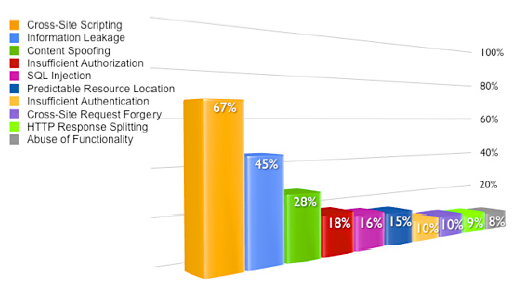
As TMCnet reported, one Santa Clara, California-based Web site security provider said this week that 82 percent of Web sites have had at least one security issue, with 63 percent still having issues of high, critical or urgent severity.
Officials at WhiteHat Security say in their “Web site Security Statistics Report” – available for download here – that vulnerability time-to-fix metrics are slowly improving, but continue to show significant room for improvement, typically requiring weeks to months to achieve resolution.
According to Jeremiah Grossman, founder and chief technology officer at WhiteHat, Web security is a moving target.
“So, enterprises need timely information about the latest attack trends, how they can best defend their Web sites, and visibility into their vulnerability life-cycle,” Grossman said. “We hope this report continues to be a beneficial tool for actionable information today’s enterprises can use to stay on top of evolving Web site security challenges.”
Here’s a look at the WhiteHat’s chart showing the top-10 security issue classes, sorted by likelihood:


According to Andrew Hayter, anti-malcode program manager at ICSA Labs, the Radialpoint Internet Security Suite met ICSA Labs’ rigorous testing criteria.
“This is critical, as our anti-malcode certification program provides businesses and consumers alike with up-to-date and valuable information that can help them select the right anti-virus products and vendors for their specific needs,” Hayter said.

Free Anti-Virus Software For Mac Users

Mac users sometimes feel left out as they feel the Mac outweighs the PC yet can not compete and feel they lose out on software etc. Well we have found a FREE! Anti-virus for them.

Read on.....

New anti-virus software that specifically targets threats against the Mac OS X operating system is available free to home users.


PC Tools' iAntiVirus is also different to other Mac security products, as it is specifically does not contain any unnecessary information about Windows-based threats – this ensures that the product is lightweight and its memory footprint and system resource usage is kept to a minimum, claims PC Tools.

It it is also claimed to have minimal system impact because it is designed to work silently in the background when in monitoring mode – threats are automatically blocked and removed. A small alert window is displayed to advise you that your Mac has been protected against an attack. The interface is functional, familiar and user-friendly, making it simple to scan, remove and manage detected infections.

The software protects a Mac against infections in real time by automatically placing detected infections in quarantine, allowing you to also view and restore items, if required. When an infection is detected and blocked, an alert is displayed below the system menu bar as shown.

iAntiVirus quarantines all detected infections, allowing you to view and restore items in the case of a false positive (for example: when scanning with engine heuristics set to high).

Frequent updates to detect and guard computers against new threats and viruses as well as provide enhancements to iAntiVirus are automatically installed and downloaded through the Smart Update function. Threat signatures are updated within hours of a high-risk malware outbreak to protect you from the latest online threats.

RRP
Private Use - Free
Customer Support/Business $49.95

Thursday, 11 December 2008

Malware-a Primer

With so many terms like spyware, virus and adware getting thrown around we though we should clear things up for you and describe what each term means.

Read on.....

I’ve got some bad news for you. If you use a computer, especially a Windows-based computer, to access the internet, the odds are very good that you are being exposed to a group of malicious, destructive, invasive, or simply annoying programs collectively known as malware.

The genus malware includes several nasty species. Below is a list of the more common varieties:

AdWare: This category includes a number of programs designed to deliver advertising to your computer. In some cases, the software is relatively benign, and simply keeps track of the websites you visit and search terms you enter to tailor the ads you see to what the software takes to be your interests. Other forms of AdWare send an endless parade of pop-ups to your computer.

Spyware: Spyware is any program that collects data about your surfing habits or other computer usage and sends that data to another computer without your knowledge. In the least offensive form, it does more or less the same thing as Adware. In the most pernicious form, it can collect bank or credit card information.

Viruses:

can cause all sorts of problems. Some erase data, some steal it, andsome turn your computer into a zombie that secretly e-mails spam to thousands of people. In other words, there are countless viruses out there, all of which do something different and bad. Windows is especially vulnerable to this problem. The number of known viruses for Windows machines is well over 100,000. The number of viruses that affect Macs or Linux machines are a tiny fraction of that, and most of those viruses are either harmless or difficult to install on target machines.
Anti-virus software will help here, but it’s not a perfect fix. Antivirus software works like your body’s immune system-it can only deal with threats it’s been trained to find. Antivirus programs either look for viruses that are already known (by searching for certain strings of code or file names) or for programs that look as though they could be viruses. The latter technique is known as heuristic analysis, and although it works well, it is not perfect.
In other words, no virus scanner can find and eliminate every virus out there. But all is not lost. By exercising some common sense and following a few basic rules, you can lessen your odds of being infected.
1) Be wary of e-mail attachments. Many, many viruses are spread by attachments. Try to avoid opening any attachment that does not come from someone you know. Even if you know the person, be careful.

2) DO NOT install programs you don’t recognize. Some websites will tell you that you must have a certain program to view their content. In the vast majority of cases, clicking the provided link will install some kind of malware. There are very few programs that you may legitimately need- Java, Adobe Reader, and Shockwave/Adobe flash come to mind. If in doubt, google the name of the program.

3) Beware of less-than-reputable websites.

4) Don’t click on the banners that promise to give you a prize if you punch the gopher (or do something similar). Often, that click will install something nasty.

5) When in doubt, check google. If still in doubt, don’t do it.

MacroVirus - Virus, Spyware, Adware 2.12

Like I have said before its not the price that matters but how it performs. This is shown from a recent peice of kit from MacroVirus which happens to be FREE!.

Read on....

The award winning MacroVirus antivirus software removes and repairs infected computers quickly and easily, to get your computer back and working as fast as when it was new. MacroVirus also scans for and removes Spyware, Worms, Trojans, Dialers, Email Virus and parasites from your computer, giving you back the performance levels you experienced when your PC was new. Virus review studies show that over 90% of computers are infected by virus or malware according to official figures, these viruses are often downloaded from the internet without you even knowing. MacroVirus spyware removal scans and removes all of these threats. You should be concerned about computer security and Viruses, Spyware and Malware because every time you enter personal or financial details into a website, these details can be intercepted and used in credit card or identity theft. Unscrupulus websites can download nasty software to your desktop or add themselves to your internet favourites. Each website you visit and the pages you click on can be monitored by Adware and used to track your every movement, this data and confidential details from your PC can be collected and sold without your knowledge or permission. Extra toolbars and search bars are often included with Malware, adding themselves to your browser, slowing your computer down and tracking your every move a virus remover is the only solution. The computers settings and defaults can be changed or even your browser homepage hijacked if you don't have virus protection from these computer virus. Malware, Spyware and Viruses slow down your PC and use up your hard disk space, infecting your computer until it no longer runs fast or produces frequent errors. Each time you download software or a file from the internet or click on a pop-up advert you risk getting infected. If you try to connect to the Internet without antivirus (anti virus) or malware protection, research has showed you will be infected.

Visit the site direct now to read more about this and download the software Click Here

No perfect Internet security software

Is there really one single perfect Interent Security Software. Maybe its just simply find several software packages and bring them together into one. We find out here.

Read on.....

Is there a thing such as the perfect anti-virus or security programme for personal computers? It’s a question we often hear today. The almost uncontrollable invasion of viruses and threats of all sorts is making users more concerned than ever about the safety of their machines and the information stored on them.

Certainly the infamous bird flu and the current cholera outbreak in Zimbabwe are frightening diseases. But in a certain way these biological, tangible plagues may eventually prove to be more controllable than the virtual type. Besides, over the last few years, the world already has seen several cases of computer viral infections or large scale hacking that have affected hundred of thousands systems, including some that were believed well protected.

Just this week, Facebook community’s 120 million users have been warned that Koobface, a virus designed to get hold of sensitive information like credit card details may strike their accounts.

There are three major anti-virus and Internet security applications: Symantec-Norton, Kaspersky and McAfee. Microsoft also supplies Defender, a complementary product that is an excellent protection against one specific form of threat: spyware.

Wikipedia defines spyware as “computer software that is installed surreptitiously on a personal computer to intercept or take partial control over the user’s interaction with the computer, without the user’s informed consent”. Spyware therefore does not cause any damage to user’s files. It “merely” steals information from your data and slows down your computer in an annoying way.

As one would expect it, it is impossible to say which of Symantec, McAfee or Kaspersky constitutes the perfect protection, or is able to catch all viruses. All these programmes work according to heuristic methods that provide a “solution that is reasonably close to the best possible answer”. In plain English, none is guaranteed to provide a 100 per cent protection against existing threats. Kaspersky is the newest of all three products and has quickly gained wide popularity.

Experts insist saying that in some instances there were viruses that Kaspersky was able to catch and that Symantec could not - and vice versa of course - which usually prompts users to ask if it wouldn’t be better therefore to have both applications installed at the same time, one complementing the other. But it does not work this way, and installing two different anti-virus programmes often creates conflicts and slows down the computer significantly. It is not recommended practice.

In addition to what anti-virus and Internet security products come with, Microsoft’s Windows has a built-in software-based firewall module that provides a reasonable level of protection against a large number of illegal intrusions to your computer.

The industry also provides hardware, physical firewalls. This is electronic digital equipment that can be installed on a network and that can be programmed to ensure various levels of protection against external intrusions.

The firewall concept is not a simple one. Setting up a physical firewall is not a layman’s task and should be left to professionals. For those who think that simple anti-virus software is not enough, hardware firewalls are the best solution, though they are not easy to manage.

Users are left with an unpleasant choice: to have just one anti-virus installed on their machine and that they can manage in a relatively easy manner, but knowing that it only provides about 95 per cent protection, or to go to extremes with the acquisition of a physical firewall but that makes the entire operation very heavy and expensive to manage. For the time being, there is nothing in between.

Filtering The Virus Filters

The interent gains many different versions of spyware daily. It also gets many new software packages to combat this huge increase. The problem is with all this increase its only a metter of time before you get confused.

Read on.....

Which antivirus software works best? The answer is getting complicated.

As much as antivirus companies trumpet their evolving abilities to root out viruses, worms and Trojans on your PC, the cybersecurity industry leaves out one important piece of information: all the malicious code they're not detecting.

Luckily, someone is scanning the scanners. On Thursday, the German nonprofit firm AV-Comparatives released its annual report based on a year of testing the cybersecurity industry's antivirus offerings, systematically pitting each one against more than 10 million samples of malware pulled from computers around the world.

The best performers in the firm's tests? Two names most Americans have never heard of: the German company Avira and the Slovakian firm ESET. And those rankings, cybersecurity analysts say, may reflect just as much on the industry's growing pains as they do on the two firms' ability to clean up your hard drive.

Avira, based in Tettnang, Germany, won AV-Comparatives' label as the overall best antivirus product of 2008, based on its ability to pull more malicious files off hard drives than big name competitors like Symantec (nasdaq: SYMC - news - people ), McAfee (nyse: MFE - news - people ) and Microsoft (nasdaq: MSFT - news - people ) in less time and with less impact on a PC's performance.

In the latest AV-Comparatives tests performed last month, for instance, Avira found about two-thirds of the previously undetected malware--collected over a four-week period--installed on the machines it scanned. ESET's NOD32 program found 51%. Symantec and Microsoft, by comparison, found only 44% of those samples, while McAfee's detection rate was below 30%.

Andreas Clementi, AV-Comparatives' chief executive founder, chalks up Avira's apparent superiority to the fact that the company has a smaller user-base than its larger competitors, so it can more quickly pipe out new virus watch lists to users without dealing with a massive network. "Symantec, for instance, is used by many millions more people around the world," Clementi says. "Smaller companies can be faster in releasing updates. Symantec has to be careful: If it caused a false alarm, it would create much more trouble for those millions of users."

But AV-Comparatives' top ranking for Avira isn't the last word in antivirus vendor ranking. In fact, the evolution of malicious software means measuring the efficacy of antivirus vendors is more complicated than ever.

In its quarterly cybersecurity showdowns, AV-Comparatives uses 50 1.5-terabyte hard drives packed with a uniform set of newly collected malicious software from "bait" computers around the world.

In half of its tests, it pits antivirus software against previously detected malware and measures the software's ability to successfully scan those big disks. In the other half, it "freezes" a version of the antivirus software, waits a month without updating it and tests it against all the malware the testers have collected during that month. That technique is designed to check the antivirus softwares' ability to find previously undetected breeds of malicious code.

But even in those elaborate tests, AV-Comparatives may not be measuring the newest features of anti-malware programs, protests Symantec's senior director of product management, Dave Cole. The next generation of malware detection, he argues, is "behavior-based" detection, which filters out bad files based largely on how they act over time after they're installed on your PC--not just their appearance at the moment of a scan.

"We used to know it was bad because it was "the bumpy Trojan," Cole says. "Now we know it's something bad because it grabs your keyboard, sends your data to China."

Another test last September by another German antivirus analysis firm called AV-Test, however, may have captured those behavior-based scanning features. AV-Test, in fact, gave Symantec top marks for the kind of "proactive" scanning that Cole describes. Avira, however, fared far worse.

The real winner, it turns out, may be ESET, which placed near the top of both AV-Comparatives' and AV-Test's behavior-based scanning tests. The company, whose antivirus software serves more than 70 million users largely in Russia and the U.S., claims its secret is advanced "heuristics, the ability to statistically recognize a familiar piece of malware in a new form."

"Viruses today are constantly shifting. They're like wolves in sheeps clothing," says Jeff Brosse, ESET's director of North American research. "Recognizing that malware is where we excel."

ESET began working on heuristics long before other antivirus companies, says John Hawes, a researcher for the British virus analysis online newsletter Virus Bulletin, and it has been able to avoid the false alarms that plague most heuristic tests. "They've struck a good balance between strong heuristics and false positives," he says. Hawes' own tests backs up the other two: He says that the 16-year-old company has been on the newsletter's VB100 certification list more times than any other firm.

But there's another wrinkle to testing antivirus software capabilities: AV-Comparatives doesn't measure an antivirus program's ability to detect new malware by comparing samples to an Internet database, a growing trend in the cybersecurity industry. (See "Filtering Viruses Through The Cloud.") That means anti-malware companies like McAfee, Trend Micro and F-Secure, which are especially focused on using those "cloud"-based systems, might not get a fair shake.

That's another reason that the real outcome of the two tests may be to show how outmoded signature-based malware detection has become. The fact that Avira could outperform competitors and only catch two out of three new types of malware, says security blogger and consultant Rich Mogull, shows that without real behavior-based detection, cybersecurity can't keep up.

In fact, he says the real key to defeating malware isn't antivirus but approaches like Firefox's no-script plug-in, which blocks Web pages from running potentially malicious programs. Mogull also advocates software platforms like Windows Vista or Google Chrome that "sandbox" or limit applications' access to computer resources. "You give applications a very small, safe place to play in," he says.

Until those kinds of security features become commonplace, the explosion of different malware breeds means antivirus vendors will be fighting a losing battle, Mogull says. "Tests can show which of these work better, but they're all far from perfect," he says. "The truth is, it doesn't really matter which is better. The bad guys will scoot around any of them."

Outperforming the Competition: AVG Anti-Virus and Walling Data, the Perfect Combination for Business Security

We recently came accross this press release and it goes to show that the saying "you get what you pay for" is not always the truth. You can find top software packages in todays world of the interent without having to pay a single penny. AVG is the main one that springs to mind.

Read on......

AVG Network Edition emerges as the winner in telecom firms' anti-virus bake-off.

Claremont, NC (PRWEB) December 11, 2008 -- Scott Mullins is the Network Administrator for CertiCell, a provider of products and services that facilitate the acquisition, repair and redeployment of aftermarket mobile phones located in Louisville, Kentucky. He's also a huge fan of AVG Anti-Virus, and insists that it cannot be outperformed by the competition.

"First and foremost, AVG just works. It keeps viruses out," he explains. "My job is demanding enough without having to waste time fixing computers that should not have gotten infected in the first place. We've used AVG Network Edition since our company's inception in 2005 and we've never had a single instance of virus or spyware infection."

Secondly, Mullins enjoys the small footprint AVG requires. "I like how AVG doesn't use a lot of processing power. Users can't even tell that it is running in the background, unlike McAfee or Symantec which tend to really bog down machines."

He's so convinced AVG is the best solution, he uses it at home, too. "I've been using AVG Free Edition on my personal computer for many years now, and I've never experienced an issue there either."

Scott and two other members oversee the company's entire IT infrastructure, comprising 60 workstations and four servers servicing 60 employees scattered across Kentucky, Tennessee and Texas.

Even the best needs to be put to the test

When Mullins noticed that the company's AVG Network Edition licenses were due for renewal earlier this year, he decided to run a test on other security solutions to see whether any of them had improved since he'd last looked at them. He does not regret his decision.

"It's always a good idea to do a little due diligence to make sure we're still getting the best deal possible," admits Mullins. "As a network administrator, it's important for me to test other products periodically. Now I can say, without a doubt, that AVG is the best antivirus solution because I've personally tested it against the competition."

Mullins' evaluation encompassed competing security products from Symantec, McAfee, Trend Micro, and Microsoft. By the end of the testing period, his opinions remained unchanged.

"I quickly discovered that I wasn't going to be able to find another antivirus program that would beat AVG in the three categories that matter -- protection, price and ease of use."

AVG and Walling Data -- "The Ones to Beat"

Around the time that the AVG licenses were up for renewal AVG Network Edition 8.0 was released. Realizing he might need some assistance in upgrading to all the exciting new functionality the newest version was offering, Mullins researched where to buy his renewal from..

"Walling Data was recommended by AVG Technologies themselves, so I figured I ought to check them out."

Walling Data is the longest-standing and highest-volume distributor of AVG Technologies solutions in North America. Walling Data is also the only distributor to offer all its customers -- resellers and end-users -- free, unlimited, U.S.-based pre- and post-sales support.
"In no time, I was connected to a live, US-based sales person at Walling Data," said Mullins. "I was very pleased with their pre-sales service -- the representative was very helpful and got back to me with a quote right away. They also offered me a great deal on AVG pricewise."

"Walling Data was great to work with. They provided free assistance with the upgrade and were extremely knowledgeable about the AVG product."

Today, Mullins is more convinced than ever that AVG Network Edition is "the one to beat" when it comes to keeping networks virus-free.

"AVG performs better than the competition, is easy to use and, thanks to Walling Data, is very attractive financially. Switching to another security solution would not only have decreased our protection but increased our costs by about 25 percent."

For more information about how to purchase AVG Anti-Virus, resellers and end users should visit http://www.avg-antivirus.net.

About Walling Data

Founded in 1994, N.C.-based Walling Data is a value-added technology distributor of technology products for resellers, small businesses, and education and government institutions. Walling Data was the nation's first distributor of AVG security products and today is the highest-volume distributor for the product in North America, with more than 50,000 satisfied customers. Walling is also the only value-added distributor for Cymphonix Network Composer, an award-winning device that helps companies control and monitor users compliance with internet usage policies. Additionally, the company has recently become a distributor of CyberPatrol's parental control and business-grade web filtering solutions. Walling Data provides free, unlimited, U.S.-based phone and "we-do-it-for-you" remote support for all of its customers. For more information, visit www.wallingdata.com and www.avg-antivirus.net

About AVG

Founded in 1991 and with offices in the US and Europe, AVG is a leading international developer of Internet threat protection solutions for consumers and SMBs. AVG is one of the fastest growing companies in the industry with more than 85 million active users around the world. The company employs some of the world's leading experts in Internet security, specifically in the areas of threat research, analysis and detection. AVG's award-winning products are distributed globally through resellers and over the Internet as well as via third parties through Software Developer's Kits (SDK).